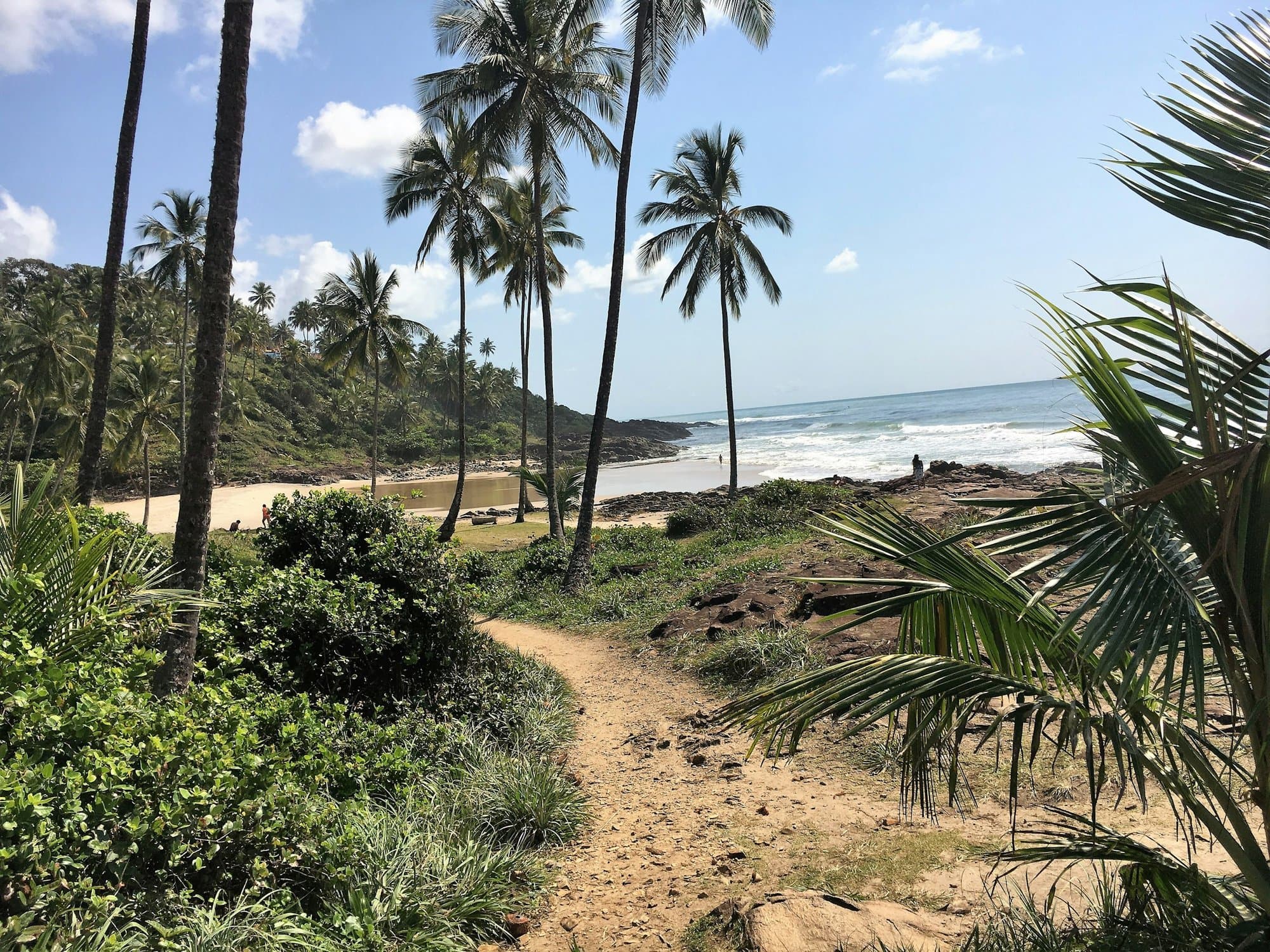
Almost everybody arrives wondering whether they need a car and almost nobody needs one for the first few days. Itacaré's centre is small enough to cross on foot in minutes, and the four town beaches link up along the shore. The question only becomes real when you want the beaches south of town, and even then there are three answers before renting anything.
Walking, which is the default
The centre, the harbour, Rua Pedro Longo and the town beaches are all walkable, and walking is how you learn the place. Surfaces are uneven in stretches and lighting thins out at the edges, so shoes matter more than they would in a resort and a torch on your phone is genuinely useful after dark.
The bus down the coast road
The BA-001 runs south past the trail beaches and buses work it through the day. This is how a lot of people reach Engenhoca and Itacarezinho, and it costs almost nothing. You get dropped on the road and walk down through forest from there.
The catch is the timetable rather than the price: services thin out in the evening, and being on a beach at the end of a trail when the last one has gone is a long walk. Ask where you are staying what the last realistic departure is on the day you go. Which beach is where is in the beaches guide.
Moto taxis
Motorbike taxis are everywhere and are how much of the town actually moves. They are quick, they are cheap and they will take you places a car will not. They are also the single most common way a visitor here ends up needing a clinic. If you use one, wear the helmet you are handed, and do not use one to carry a surfboard or a child.
Taxis and cars with drivers
Ordinary taxis exist and drivers can be arranged through anywhere you stay, which is often the easiest way to do a day out south of town: you get dropped, you get collected, and you are not watching the clock for a bus. For a group it makes obvious sense. For the airport run it is worth arranging in advance, as covered in how to get here.
When a rental car earns its keep
A car is worth it if you are staying out towards Serra Grande, if you are travelling with children and a lot of gear, if you want the falls and the forest on your own schedule, or if you simply hate timetables. It is not worth it for a short stay based in town, where you will pay to leave it parked.
One rule if you do rent: drive the coast road in daylight. Unlit stretches, animals and potholes stop being theoretical after dark, which is in the safety guide along with the rest of it.
Bicycles
Fine for the flat run through the centre and along to Concha, less fine for anything with a hill or sand in it, and the coast road is not somewhere to learn to ride in traffic. Useful if you are staying a while and want independence for short hops.
On the water
Boats go out from the harbour and up the Rio de Contas, which is transport and an afternoon at the same time. Boats also run out to the Baía de Camamu for a full day. What is running and when sits under what there is to do and in the forest and river guide.
Getting home at night
The centre stays busy and lit late and walking there is unremarkable. Further out the streets get dark, and the sensible move is a taxi rather than a long unlit walk. That is worth factoring in when you choose a neighbourhood, which is what the areas pages are for.
Common questions
- Do I need a car in Itacaré?
- Not for the town or the four beaches you can walk to, which is most of what people do. A car earns its keep if you are staying out towards Serra Grande, travelling with children and gear, or want the beaches and waterfalls on your own schedule rather than a bus timetable.
- How do you get to the beaches south of Itacaré?
- Buses run the BA-001 coast road through the day and drop you at the top of each trail, from where you walk down through forest. A taxi or an arranged driver does the same thing without the timetable. Check the last realistic departure before you go, because services thin out in the evening.
- Are moto taxis safe in Itacaré?
- They are quick, cheap and how much of the town moves, and they are also the most common way a visitor here ends up needing a clinic. If you take one, wear the helmet you are handed, and do not use one with a surfboard or a child.
- Is Itacaré walkable?
- Yes. The centre, the harbour, Rua Pedro Longo and the four town beaches are all on foot, and walking is how the place makes sense. Surfaces are uneven in stretches and lighting thins at the edges, so bring shoes rather than only flip flops.
- Is there Uber in Itacaré?
- Do not plan around it. Taxis and drivers arranged through wherever you are staying are the reliable option, and for a day out south of town being dropped and collected is easier than watching for a bus.
- Can you cycle in Itacaré?
- For the flat run through the centre and along to Concha, yes. Less so for hills, sand or the coast road in traffic. It suits longer stays where you want independence for short hops.