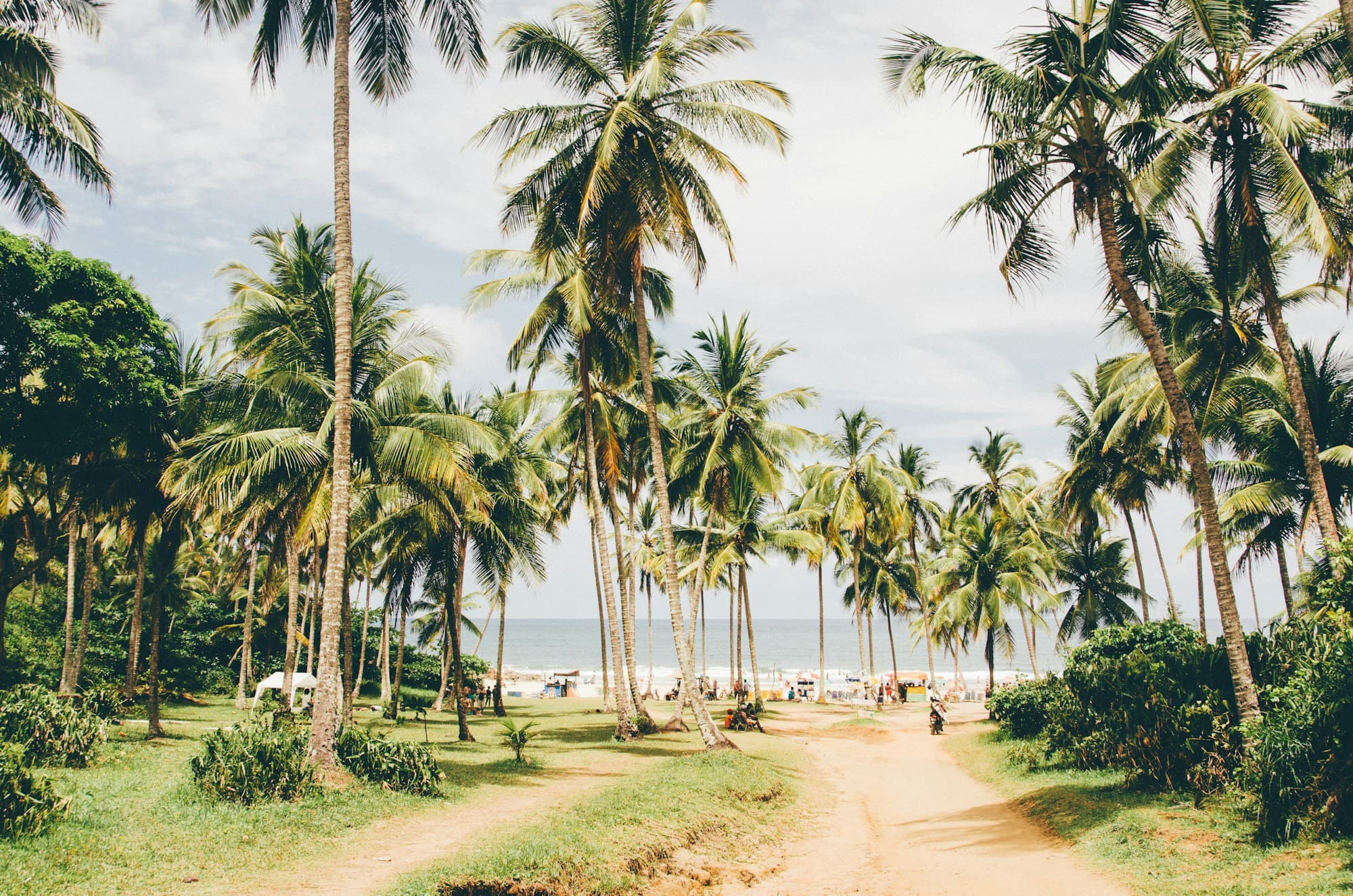
Itacaré has no airport, no train and no direct flight from anywhere. Getting here always means landing somewhere else and then covering the last stretch by road.
There are two realistic options: Ilhéus, an hour and forty minutes south, and Salvador, the state capital and the region's real international gateway. Which one is right for you depends less on Itacaré and more on where your trip actually starts.
Salvador or Ilhéus: how to choose
The two airports are not really competing for the same traveller, and that is the part most guides skip over.
Salvador (SSA) is Bahia's main airport and the only realistic international entry point in the region. If your itinerary starts outside Brazil you will typically land there whatever you book onward, because that is where the international carriers fly, with direct or one stop connections from Europe and beyond that Ilhéus does not have at all. For a lot of visitors Salvador is not really a choice. It is simply where the international part of the journey ends.
Ilhéus (IOS) is a small, single terminal domestic airport, and it exists to feed the coast around Itacaré. You can only reach it on a domestic connection through São Paulo, Rio, Brasília or Salvador itself. So it only comes into play once you are already inside Brazil's internal network, whether that is the second flight of an international trip or a booking made entirely within Brazil.
That is where the real trade off sits. Once you are choosing between two domestic tickets, one to Ilhéus and one to Salvador, Ilhéus is not automatically the better deal just because it is closer. Salvador is the bigger, more competitively priced hub, and a domestic fare into Salvador is frequently cheaper than the same fare into Ilhéus. Ilhéus buys you back four to six hours of travel. Salvador can buy you back real money. Neither is wrong, but price both before you book on autopilot.
A rough way to decide: if the fare difference is small, or you are coming off a long haul flight and would rather be done travelling, pay the extra and fly to Ilhéus. If the saving is significant, or you were always going to spend a night or two in Salvador, take it and treat the overland leg as part of the trip rather than a detour from it.
When the flights fill up
Over the Brazilian summer holidays in December and January, and again through the July school break, the Ilhéus timetable thickens noticeably, with Azul, GOL and Latam adding capacity mostly via São Paulo, Rio, Brasília and Salvador. More flights, but also less room if you book late, so in those windows sort the flight before anything else.
Which month you pick changes more than the price of the ticket. It changes how full the town is, what is open, and whether the swell or the whales are here at all. That is covered in when to come to Itacaré.
The road north from Ilhéus airport
The route from Ilhéus to Itacaré follows the BA-001 up the coast. It is a proper road, paved the whole way, and genuinely one of the better drives in Bahia: Atlantic forest on one side, the odd view down to the water on the other, a couple of small river crossings. Nobody needs a four wheel drive.
Allow about an hour and forty minutes door to door. Traffic is not the issue here. The road simply is not fast, and it should not be. Plan as though it will take two hours and you will never be the one arriving stressed.
By bus from Ilhéus
The bus is the cheapest way north and it is perfectly civilised. Rota Transportes and Cidade Sol both run the coastal route, leaving from the bus terminal in Ilhéus rather than from the airport, so there is a short taxi hop to make first.
A few things worth knowing before you rely on it:
- Buy at the counter in the terminal or book online.
- You can pay by card or in cash. A ticket is around 37 reais.
- Departures thin out after dark. If you land in the evening, check the last service before you commit to the bus, not after.
- It is a local bus, not an airport shuttle. It stops. That is part of the charm and also part of the two hours.
By private transfer from Ilhéus
A fixed price ride from the airport door to your accommodation is the easier arrival, and on a first night with luggage and no Portuguese it is usually worth it. Several drivers in Itacaré run them. They meet the flight, and they wait if you are late, which is the part that actually matters when you have connected through São Paulo.
Arrange it before you fly rather than at the arrivals door. Most pousadas can book one for you, and the drivers who run them work over WhatsApp. How the town moves once you are here is in getting around Itacaré.
Coming from Salvador
Salvador is the bigger airport with the wider international and domestic network. Overland from Salvador to Itacaré takes somewhere between six and eight hours, depending on the route and the ferry, because the Baía de Todos os Santos sits in the way. There is no direct bus.
By ferry and bus
Take a taxi to the ferry terminal, cross the bay to Bom Despacho, and continue south by road. From Bom Despacho, Rota Transportes and Cidade Sol both run the coastal route. The alternative is to drive the long way around the bay.
By private transfer
If you land in Salvador and want the last stretch handled rather than pieced together, a private transfer covering the whole run, ferry crossing included, is usually easier than timing buses and boats yourself, especially straight off an international flight.
From Morro de São Paulo, Boipeba and the north
Coming down the coast rather than flying in, the usual chain is a boat from Morro de São Paulo or Boipeba to Valença, then road south. It is a longer day than the map suggests, and the boat schedule is the part that fixes everything else, so build the day around that departure rather than around when you feel like leaving. If you are still deciding between the two places, Itacaré or Morro de São Paulo sets them side by side.
Getting from the bus stop to your bed
Itacaré is small and the centre is walkable end to end. That said, walking it for the first time in the dark with a suitcase on cobbles is nobody's idea of a good start. Taxis and mototaxis wait where the bus arrives, and most pousadas will send someone if you tell them roughly when you are due.
How far you have to go depends entirely on which part of town you booked. The centre and Pituba are a short walk from the arrival point, Praia da Concha is ten minutes on foot, and anything out towards Serra Grande needs wheels. If you have not booked yet, the differences are laid out in where to stay and area by area under areas.
Arriving with a surfboard
Boards travel on the buses, but tell the driver before anything goes into the hold rather than after. The airline is the more expensive half of the problem: check your carrier's board policy when you book, not at the desk, where it is always dearer or already full. If you are routing through Salvador on an international ticket, check it for both flights, because domestic and international allowances do not always match.
If you are here for a week or less it is usually cheaper, and always easier, to rent a board once you arrive. Where to rent one is in surfing in Itacaré.
Sort these before you land
None of these is dramatic, and all of them are more annoying to fix at eleven at night than at home in advance:
- Cash. Bring some. Cash machines exist in the centre, but not every driver takes a card.
- Your first night. Arriving without a bed in high season is a specific kind of misery.
- The transfer, if you are landing after dark or routing overland from Salvador.
- A rough idea of where you are sleeping relative to the centre, so you can tell a taxi driver something more useful than the name of a pousada.
Once you are here the rest sorts itself out quickly. Start with what there is to do, have a look at how the week works for eating and drinking, and if you want the whole trip shaped around how long you have and what you came for, answer four questions on plan your trip.