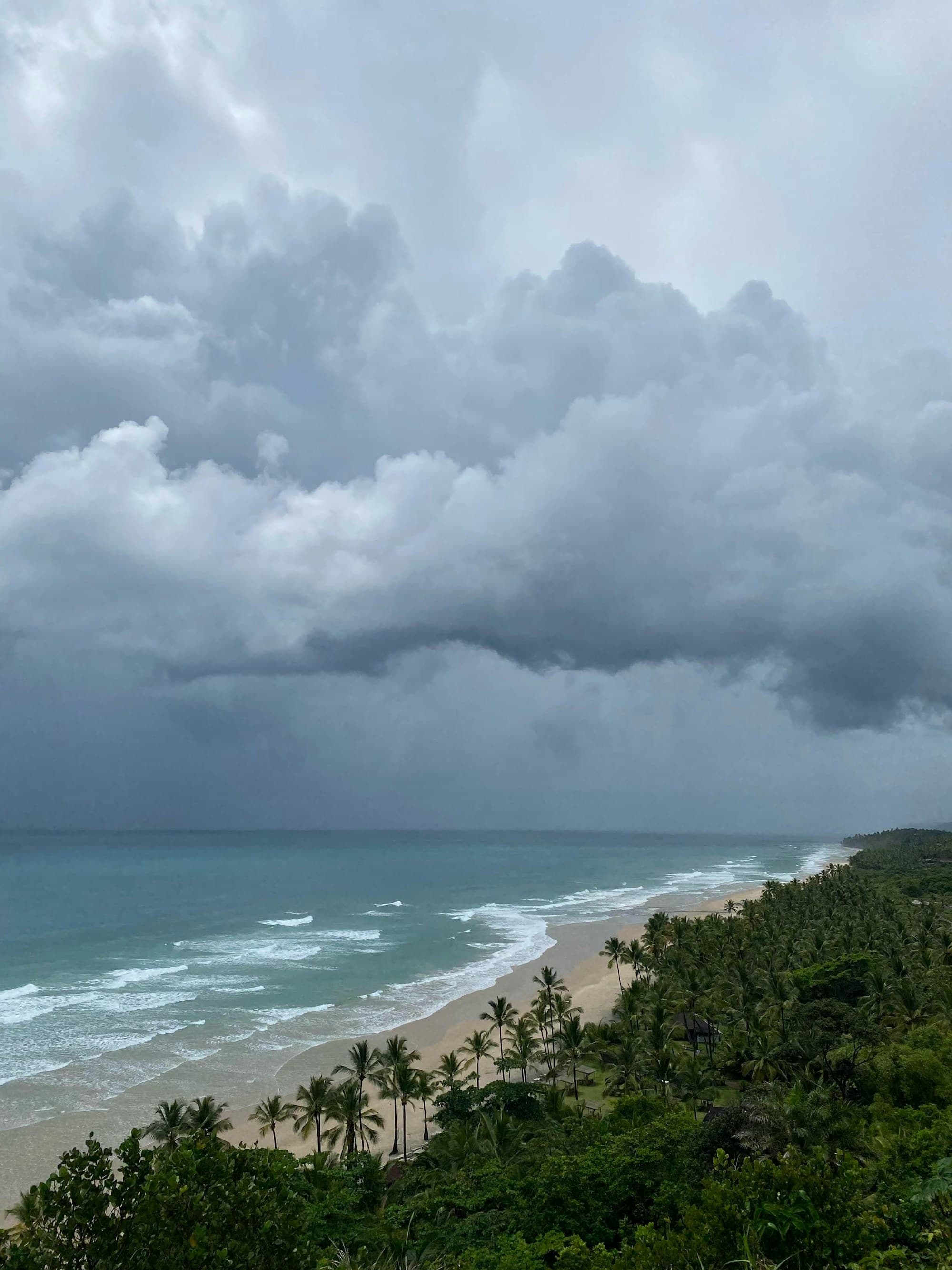
Itacaré sits close enough to the equator that the seasons here are not the four you grew up with. The temperature barely moves. What moves is the rain, the swell, and the number of people, and of those three it is the number of people that will shape your trip most. The same beach in October and at New Year is two different places, and neither the weather report nor the photographs will tell you which one you are booking.
The short answer
If you can choose freely, come in August or September. The swell is at its biggest, the whales are going past, the July school holidays are over, and the town has not filled up for summer yet. That is the window locals point at when they are being honest about it. Everything below is for people who cannot pick freely, which is most people.
High season: late December to Carnival
Brazilian summer holidays run from just before Christmas through Carnival, and this is the town at full volume. Every bed is taken, the live music calendar is at its fullest, Rua Pedro Longo is shoulder to shoulder at night, and the beaches you had to yourself in October have crowds on them.
It is genuinely a good time to come if that is what you want, and a bad one if it is not. What is not optional is booking early. Accommodation for New Year and Carnival goes months in advance and prices rise sharply as the dates close in. Turning up in that window without a reservation is how people end up sleeping in Ilhéus.
July: the other busy month
The Brazilian school break in July brings a second wave, shorter and more family shaped than the summer one. The town is busy but not frantic, the whales have arrived, and the surf season is under way. It is a reasonable compromise if the northern summer is the only time you can travel.
March to June: the quiet stretch
On paper this is low season. In practice the town has been busier in these months lately than the label suggests. What you get is space: most beaches to yourself, no queue for anything, and the town operating at the speed it runs at when it is not performing for anyone.
The trade is mud and cloud. The trails to the southern beaches get slippery, the light is flatter, and some places close for a stretch to do repairs. If your trip is built around the beaches and long walks between them, this is the harder half of the year for it.
What the rain here actually does
This is the thing people get most wrong from a distance. Itacaré sits on the edge of Atlantic rainforest and it rains through the year, but it comes in bursts of an hour or two rather than settling in for days. A forecast showing rain every day for a fortnight is not describing a washout, it is describing normal weather here. You will still get beach days in the wettest month, and you will still get soaked in the driest.
Surf season
South and southeast groundswells run most consistently from April through September, the Brazilian winter, and that is when the waves are biggest. October through March is smaller and less reliable, which is exactly what makes it the better half of the year to learn in. The water never gets cold either way.
Whales, July to September
Humpbacks pass this coast between roughly July and September, on their way to mate and calve in warmer water. There is no dedicated whale watching boat from Itacaré itself, but on a clear day you can often see them from the shore, from the exposed beaches and the clifftops. It is the one seasonal event here genuinely worth planning dates around.
Month by month, briefly
- December to February: hottest, fullest, most expensive. Book far ahead. Best for nightlife and atmosphere.
- March to May: quiet and green, more rain, muddy trails. The big swell starts in April.
- June to August: big swell, whales arrive in July, July busy with Brazilian families.
- September: the sweet spot. Big swell, the last of the whales, crowds gone.
- October and November: smaller waves that suit learners, whales gone, the town quiet.
If you only have a week
A week is enough to do this properly, and it is roughly what the town is built around. Give two days to the walkable beaches while you find your feet, one full day to the trail beaches south of town, and keep a day loose for weather. The plan your trip page turns that into something specific, and how to get here covers the day at each end that people forget to budget for.
Booking, and how far ahead
Outside the two peak windows you can be fairly relaxed, and plenty of people arrive and find somewhere the same day. For New Year, Carnival and the July break, that does not work. Look at where to stay and the areas pages first, because the neighbourhood you pick matters more here than the building, and in the busy weeks the choice of neighbourhood is the first thing you lose.
Common questions
- What is the best month to visit Itacaré?
- August or September. The swell is at its biggest, the whales are passing, and the July crowds have gone. If you are learning to surf, October to March is friendlier, with smaller waves and a quiet town until December.
- What is the rainy season in Itacaré?
- It rains through the year, with the wetter stretch usually falling between March and June. It matters less than the forecast suggests: rain here arrives in bursts of an hour or two rather than settling in for days, so a wet forecast is rarely a reason to change your dates.
- When can you see whales in Itacaré?
- Humpbacks pass this coast roughly between July and September, on their way to mate and calve in warmer water. There is no dedicated whale watching boat trip from Itacaré itself, but on a clear day you can often see them from the shore and the clifftops.
- Is Itacaré crowded at New Year and Carnival?
- Very. Late December through Carnival is the busiest and most expensive stretch of the year, the town runs at full volume, and accommodation goes months in advance. Come for the atmosphere or avoid the window entirely, but do not arrive without a reservation.
- When is the surf season in Itacaré?
- April through September, the Brazilian winter, when south and southeast groundswells are most consistent and the waves are biggest. October through March is smaller and better for learning. The water runs roughly 23 to 30 degrees year round, so nothing about the season stops you getting in.
- How long should I stay in Itacaré?
- A week suits the place: two days on the beaches you can walk to, a full day on the trail beaches south of town, and a day held loose for weather. Most people who come for three days end up wishing they had booked longer.