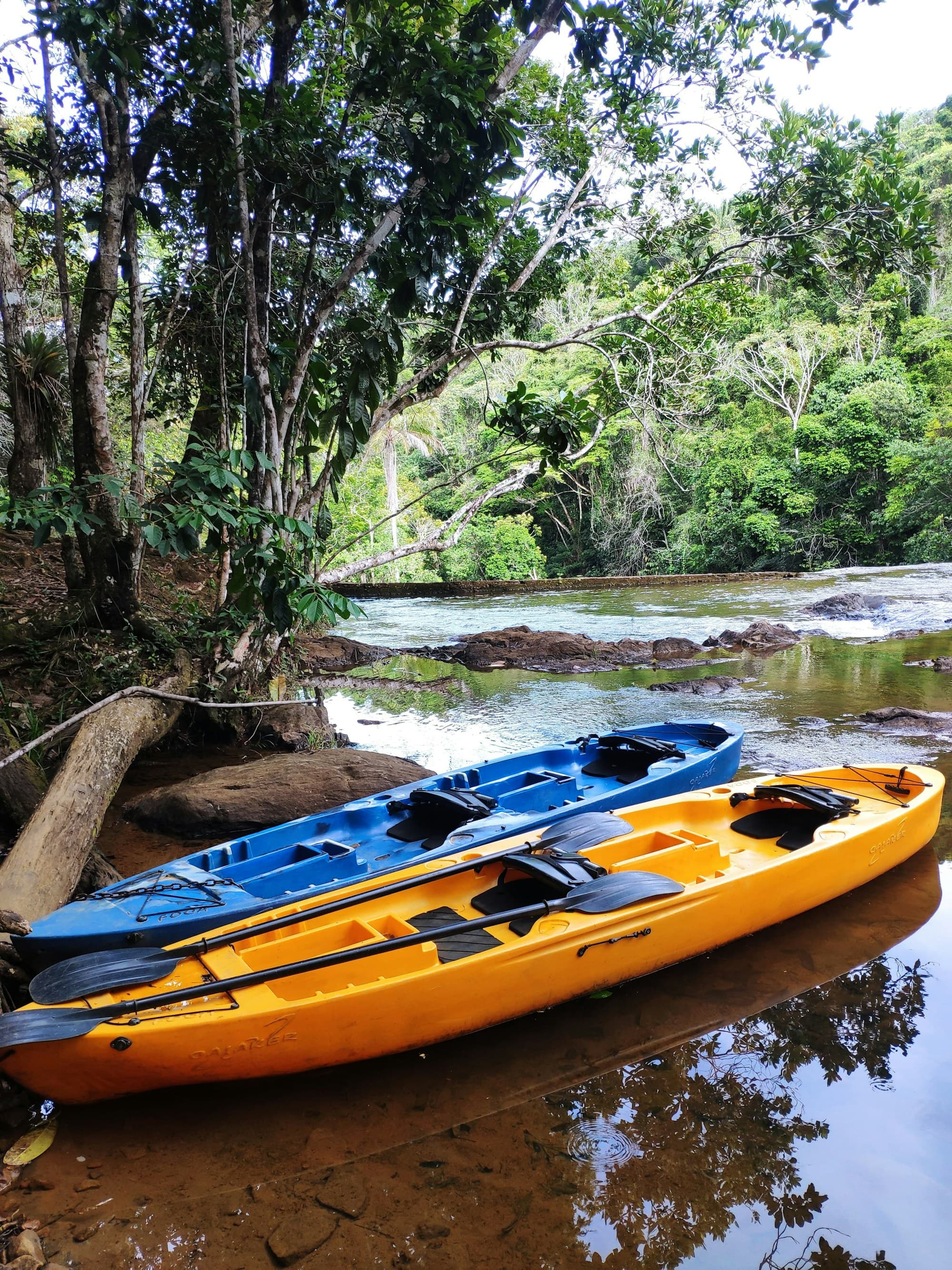
Nobody is bored in Itacaré for long. Alongside the beaches the town is known for there is a surprisingly wide range of things to do in and around the centre: a ball on the sand, a yoga class above the ocean, a first step onto the capoeira floor, a canoe up the Rio de Contas. Most of it runs through local sports clubs, small cultural houses and guides who have been doing it for years, and most of it is as easy to book as a surf lesson.
Times and prices below were checked locally in October 2026. Schedules here follow the season, so treat a time as a good starting point and confirm it before you plan a day around it.
Anyone arriving in Itacaré soon spots the nets on Praia da Concha. Footvolley, where anything but your hands is allowed, is played here with real enthusiasm and is one of the most recognisable sights of beach life. Its looser cousin is altinha, a circle of players keeping the ball in the air without letting it touch the sand.
If you want to learn properly rather than join in and hope, there is Altavibes on the beach, and Itacalta, a small training centre by Itacaré Beach Tênis in the Concha neighbourhood that is dedicated to altinha. Classes are kept small, at most four students to an instructor, and build up step by step: ball control with chest, thigh, head and foot, then reading the game. A trial class is booked over WhatsApp or Instagram.
Capoeira
Capoeira belongs to Bahia as much as the waves do, and in Itacaré it is not a show for visitors but a living tradition. Associação de Capoeira Filhos de Zumbi has been based on Rua Amaralina in the Pituba neighbourhood since 1993. It was set up mainly to give local children a sport and a community, and it is just as open to adults and visitors. It is on Instagram.
Training runs on Mondays, Wednesdays and Fridays:
- Mornings, half past eight to ten, with instructora Maristela.
- Children, half past six to half past seven in the evening.
- Adults, half past seven to nine in the evening, led by the founder, Mestre Peroá.
Anyone passing is welcome to join in or simply watch a roda.
Brazilian jiu-jitsu
Less obvious, but well represented here, is Brazilian jiu-jitsu. Alongside the local academies, some of which run social projects for children, Diogo Souza, a second degree black belt with more than twenty years of experience, teaches a class aimed at visitors: ninety minutes of warm up, technique, partner drills and light sparring if you ask for it, in Portuguese or English.
The meeting point is Pf do Surf restaurant in the Pituba neighbourhood, from where you walk together to the training space. Expect to pay around twenty US dollars a person, with free cancellation up to 24 hours ahead. You train alongside the local community rather than in a class laid on for tourists, which is most of its appeal.
Yoga and wellness
For anyone who would rather stretch than spar after a day of surfing or walking, there is plenty of yoga. Casa Fluir, the cultural house and bar in the centre, runs classes alongside the rest of its programme, and Pousada Ilha Verde, Villa Estrela and ITC Wellness Spot all teach as well, often in small groups with the forest or the sea behind them.
What is on changes with the season. If you want a regular class, ask at your pousada or around the centre, where timetables are often simply pinned to the door.
Tai chi, chi gong and kung fu
Further out of the centre, in Jeribucaçu, there is chi gong, tai chi chuan and kung fu on Mondays and Fridays from eight to ten in the morning. It is the calmer, more meditative counterpart to the energetic sports in town, and it happens outdoors, between the forest and the waves.
Forró and samba
Once the sun goes down the rhythm moves from sport to dance. Casa Fluir is the regular home of forró, with classes and evenings where anyone, from first timers to seasoned dancers, can simply step onto the floor. Samba de roda, the older and more informal samba of this part of Bahia, turns up at street parties and capoeira rodas, where musicians and dancers feed off each other. It is less a class than an atmosphere you fall into when you come across it. Which nights the town comes alive is set out in nights out in Itacaré.
Canoeing on the Rio de Contas
The river running past the centre is an attraction in its own right. The popular option is a canoe or boat trip at sunset, past fishing houses, mangrove and small islands, calm and open to anyone.
With more time, combine it with Cachoeira Cleandro, a waterfall further up the river. Expect around 50 to 60 reais for the boat and about 15 reais to enter the waterfall, with as long as you like to swim once you are there. If you would rather paddle than be rowed, stand up paddleboards can be rented and learned at several surf schools in the centre.
Hikes and waterfalls
A network of trails runs through the Atlantic forest around Itacaré, with waterfalls and hidden beaches as the reward. The Trilha das Quatro Praias, the four beaches trail, is the best known and the closest to the centre. Further out are falls such as Cachoeira do Tijuípe and Bom Sossego, which pair well with a horse ride or a quad bike trip. The forest, the river and what to bring are covered in waterfalls, river and forest.
Treetops, horses and off road
Conduru Arvorismo, near Praia do Ribeira, runs a course of hanging bridges and a zipline through the forest canopy, with levels for beginners and for people already comfortable with height.
For horse riding there is Roça di Praia in Vila Camboinha and Itacaré EcoRanch. Roça di Praia rides at three levels, from complete beginners to experienced riders, on trails through forest and along the coast, and the highlight is a stretch where the horses wade through lagoons and into the sea, and sometimes swim. Itacaré EcoRanch focuses on beginners, with shorter rides out to Cachoeira Bom Sossego, alongside full day rides for anyone with more experience.
If you would rather see the forest on wheels, quad bikes and buggies can be rented for the sandy tracks around town, and further inland in Taboquinhas there is river rafting.
Boat trips, diving and snorkelling
Boats leave Itacaré for the Baía de Camamu, one of the largest bays in Brazil, stopping at islands such as Pedra Furada and Sapinho before finishing at the fishing village of Barra Grande. It takes the whole day. Closer to home you can snorkel and dive at the natural rock pools and reefs along the coast, including underwater caves at Itacarezinho, with local operators running trips for beginners and for certified divers.
Whale watching
Between July and September humpback whales travel along the coast of Bahia to mate and calve in warmer water, and the sea off Itacaré lies right in their path. From the shore at the nearby Txai resort they are regularly visible to the naked eye in season, and binoculars are set out at the spa so guests can follow them from the terrace.
There is no dedicated whale watching boat trip in Itacaré itself. Anyone on one of the exposed beaches or clifftops in those months would do well to keep an eye on the horizon.
Cacao and chocolate
This part of Bahia has been cacao country for a long time, and several farms in the area, such as Vila Rosa, show how cacao becomes chocolate from bean to bar, with a tasting at the end. It is a calmer outing to slot between the active ones, and combines well with a nearby waterfall. Vila Rosa is on Instagram.
Food, drink and festivals
Itacaré takes its food seriously, and it shows every July at Festival Sabores de Itacaré: two weeks of cooking demonstrations from more than fifteen chefs and local shellfish gatherers, a farmers' market with produce from the region, community tourism at nearby quilombos, and free cultural performances on the Orla da Coroinha waterfront.
If you would rather read than eat, Flicaré, Itacaré's international literary festival, takes over Praça São Miguel in late October with talks, book launches and live music. One past edition was given over entirely to cacao and chocolate.
With all this on offer, a day in Itacaré is rarely just a day at the beach. To shape a week around how long you have and what you would rather do, start with plan your trip, and if you want to know exactly where the waves break, read on at surfing in Itacaré.